🚀 Bridging Minds: Where Industry Meets Academia in Data Science & AI! 🌍📊

Join us at Bridging Minds: Industry Meets Academia in Data Science & AI, where the brightest minds from academia meet industry experts and leaders to explore the latest breakthroughs in data science and artificial intelligence. This is your opportunity to learn from top researchers, connect with industry leaders, and gain insights that drive real-world innovation.

💡 What to Expect?
✔️ Keynote talks from world-class data scientists & AI researchers
✔️ Exclusive networking with innovators & decision-makers in industry
✔️ Friendly, low-key atmosphere in a beautiful setting

🎤 Keynote speakers include
✔️ Johannes Lederer
✔️ Ville Kulmala
✔️ Martin Spindler
✔️ David Salinas
and surprise guests

📅 August 20 — 22, 2025 | 📍Donaueschingen, Germany | 🎟️ Limited Seats Available

Be part of the future of data-driven innovation. Secure your spot today! 🔗 https://www.datascienceminds.com

Haben wir den Krebs bald besiegt? 💊

Taucht mit uns ein in die faszinierende Welt der Nanomedizin. Im Singapur-Special unseres Podcasts sprechen wir mit Matthias G. Wacker von der National University of Singapore über den Stand der Forschung und die Zukunft der Nanomedizin. Matthias beschreibt uns die Herausforderungen der unvorstellbar kleinen Skalen. Und überhaupt: Was sind nanomedizinische Produkte überhaupt, und aus was bestehen sie? Für uns wagt er auch einen Blick in die Kristallkugel: Leider müssen wir uns wohl auch in zwanzig Jahren mit Krebs herumschlagen. 😷

Daneben sprechen wir auch über Matthias’ Leben in Singapur—einem ganz besonderen Fleckchen Erde in Südostasien—und der Gesundheitsversorgung im Land. 🇸🇬

📷📷📷 Wie steht Ihr der Nanomedizin gegenüber? Können wir in Sachen Gesundheitswesen etwas von Singapur lernen? … Postet Eure Gedanken zur Folge fleißig auf LinkedIn und Instagram: Die Autorinnen und Autoren der spannendsten Beiträge bekommen von uns ein “Data Science Talks”-Überraschungspaket zugeschickt!

Diese Folge und alle weiteren Folgen von Data Science Talks gibt es wie immer hier. 📻

Dank gilt wie immer unserem wunderbaren Team Ronja Maack, Juan Ainto und unserem “Neuzugang” Nico Räcker.

AI Is Hungry for Data

How many samples are needed to train a deep neural network? Our recent paper explores this question and comes to the conclusion that: it takes many, many samples. The paper will appear in ICLR 2025. Congratulations to Pegah and Mahsa, who did a wonderful job on this! 🍺🍺🍺

Want to become a data-science researcher in Germany?

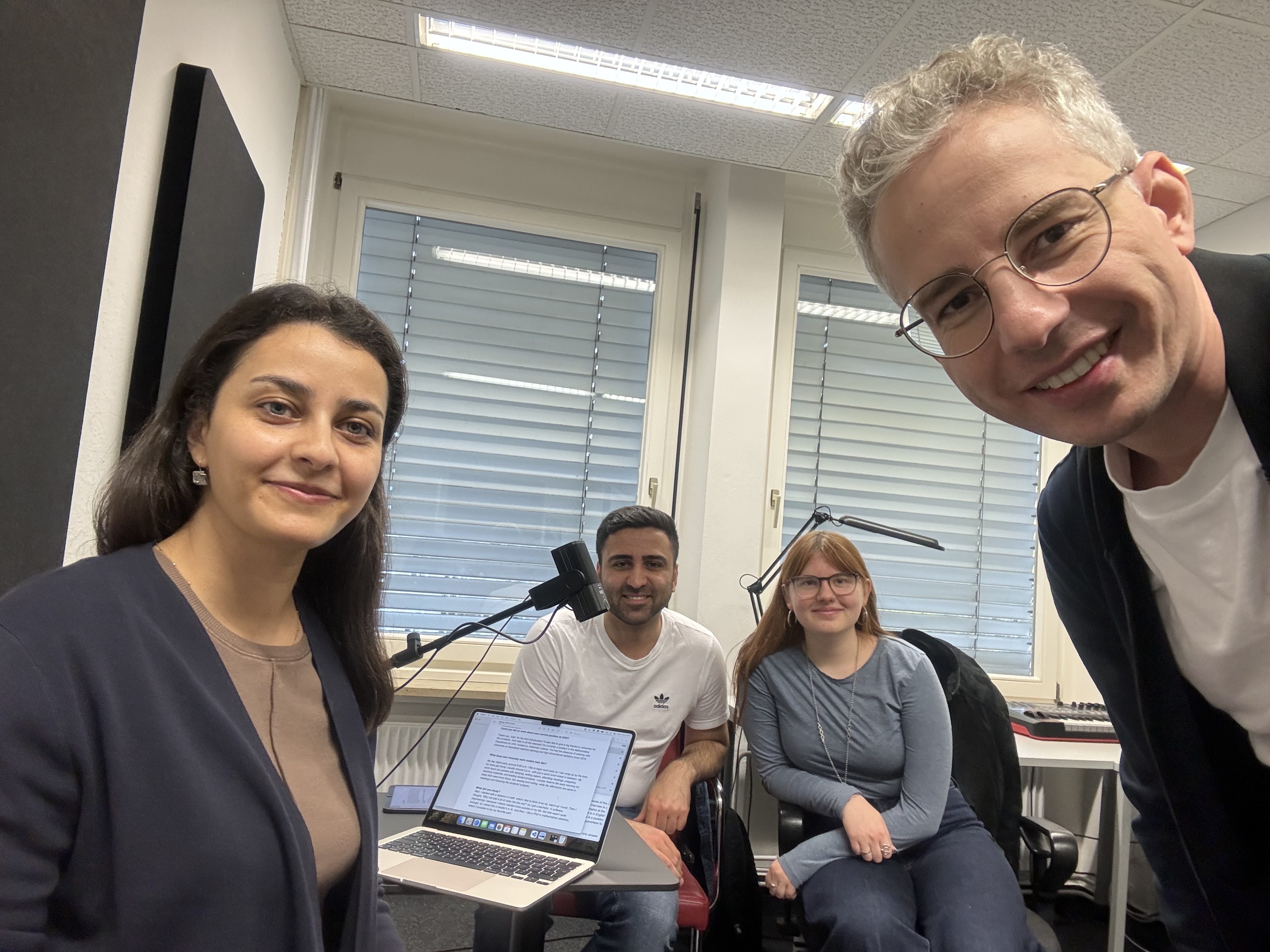
Then, listen to the new episode of “Data Science Talks”. Juan, Master’s Student in our team, has interviewed Mahsa, postdoctoral researcher at UHH from Iran. Mahsa talk about why Germany is a good place for data-science research, how to survive German bureaucracy, how to manage your research life when you have a family, and what mathematics can contribute to our understanding of AI. Find the podcast here.

We are also hiring a student assistant for the podcast—let us know if you are interested.

PodcastMahsa

What a Team!

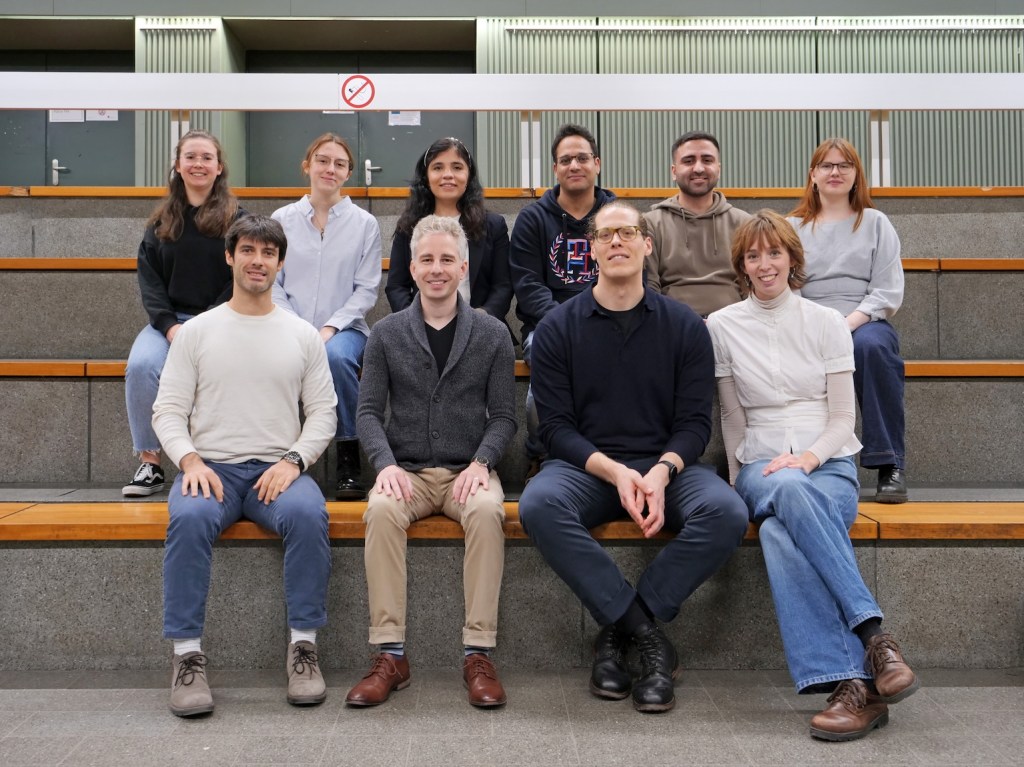
I am proud to work with so many talented young researchers here in Hamburg. Keep it up! (And thanks to our wonderful photographer Heiko Fuchs! 📷)

Was können wir bei Arbeit und Digitalisierung von Japan lernen?

In unserer neuesten Podcast-Folge sprechen wir mit Martin Schröder aus Osaka über Arbeit und Digitalisierung. Wir erfahren dabei zum Beispiel, dass japanische Firmen einen anderen Ansatz für Digitalisierung als wir in Deutschland verfolgen: Innovation geschieht oft der Quelle (“Gemba”) anstatt durch hierarchische Prozesse (“Industrie 4.0”). 💾

Dabei sprechen wir auch darüber, wie sich der Arbeitsalltag in Japan von dem in Deutschland unterscheidet. Beispielsweise bestätigt uns Martin, dass in Japan tatsächlich mehr gearbeitet wird, und dass Berufsbilder flexibler sind. 🚧

Und natürlich erzählt uns auch Martin etwas über sein Leben in Japan. 🇯🇵

Weitere Infos zum Podcast findet Ihr hier.

Anomaly detecion based on images

Anomaly detection attempts to identify “unusual” instances, that is, instances that deviate considerably from what is expected. Machine learning has become pretty good at detecting such anomalies—as long as abundant data are available. If data are scarce, however, the problem remains challenging. State-of-the-art approaches are multi-modal: they use several types of data simultaneously, usually images and text. But humans can often do well at anomaly detection using images alone. Our recent paper “AnomalyDINO: Boosting Patch-based Few-shot Anomaly Detection with DINOv2” has shown that the same is true also for machine learning. The reviewers agreed, and so our paper has been accepted for WACV 2025. 😁 Congrats to Simon and Mike, and thanks to our collaborator Asja! 🍷🍷🍷🍷

Congratulations Mike!

This week, Mike has successfully defended his PhD. Mike’s presentation was inspiring—just as his research leading to this PhD. Mike contributed to a variety of topics, ranging from high-dimensional statistics to generative models. However, Mike’s presentation showed that all these topics still fit a general notion of bias. You can find Mike’s papers in the publications tab on our homepage.

We were really fortunate to have Mike on our team for four years. It was also a great pleasure to co-advise Mike with Asja Fischer. Asja is an amazing researcher and mentor. I am sure we will have many more collaborations to come!

World Congress

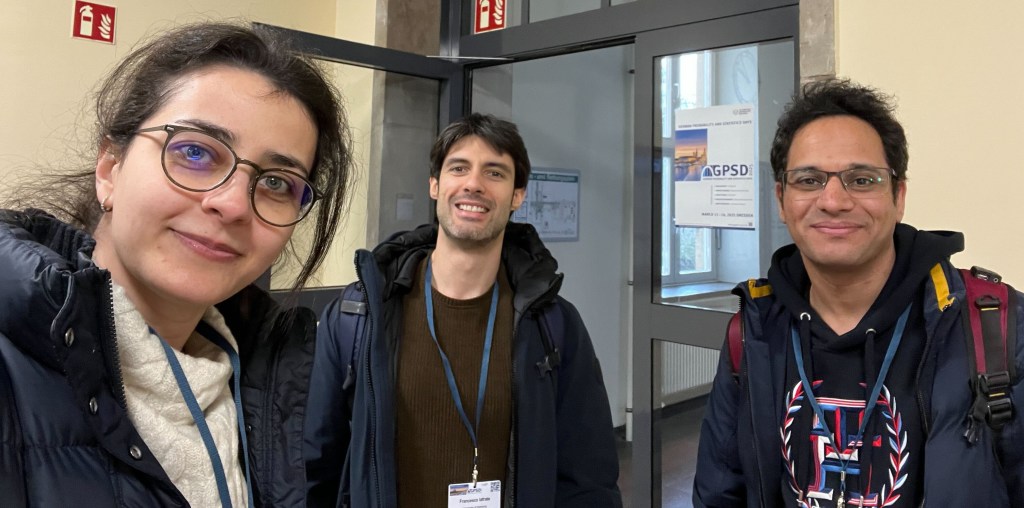
Ali, Pegah, and Milena just returned from the World Congress in Probability and Statistics, where they showcased our work on mathematical machine learning and AI. They also brought a lot of inspiration and motivation back home to Hamburg.

Welcome back! We are proud that you are such great ambassadors for our team.